




The Research Team
This research is funded by the Dutch Organization for Scientific Research (Nederlandse Organisatie voor Wetenschappelijk Onderzoek, NWO) under the grant number: IIW.1154.23.131.
This research is carried out by Kate Avis, Marjolein Missler, Paul Boelen, and their research team at Utrecht University. Find out more about the core researchers involved in the study
below:
 My name is Kate Avis and I have worked at the Clinical Psychology department at Utrecht University as both a teacher and researcher since 2021. Before joining the university, I spent several years working as a psychologist, supporting people with a wide range of mental health difficulties. That experience played a key role in shaping my research interest in how people experience and navigate grief.
While working in clinical practice, I encountered many people who were struggling with grief and loss. What struck me was the gap between the number of people experiencing difficulties in their grieving process and our limited understanding of how to best help them. This realization motivated me to return to academia, where I felt I could make the greatest difference by contributing to research that could help improve support for bereaved individuals.
My personal motivation to study bereavement began much earlier, when my father passed away when I was just eighteen years old. Since then, I have experienced several other significant losses. Through these experiences, I have learned that grief is a powerful emotion with the capacity to profoundly shape and transform a person’s life. This has driven my desire to better understand grief and to explore how we can harness that understanding to support others.
The FLIGHT study is an important part of that goal. Through this research, we hope to deepen our understanding of grief and, ultimately, improve the support available to those who need it. I am deeply grateful to everyone who chooses to participate in this study as their experiences and perspectives are essential to advancing our understanding of the grieving process.
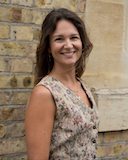 Kim is a research assistant and facilitator who, following a career in health communication and marketing, returned to university in her 30s to study psychology. Her work focuses on grief, mourning, and identity through the lenses of critical psychology and the psychological humanities. Kim has trained as a grief facilitator, hosting circles and retreats in the Netherlands and Canada. Her approach is deeply informed by her own lived experience with bereavement, having lost her mother at 20 and her father in her early 30s. She is committed to honouring grief as a universal human experience, approaching it through both a psychological and existential lens.
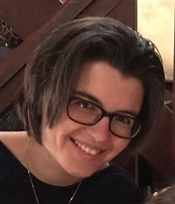 Marjolein Missler is Assistant Professor at the Clinical Psychology Department of Utrecht University. Her research focuses on the impact of parental distress on the parent-child relationship and children’s development, especially in the context of major life events.
 Paul Boelen is full professor at the Department of Clinical Psychology at Utrecht University. He also works as a psychotherapist at ARQ Centrum’45. Paul Boelen is licensed supervisor and cognitive behavioral therapist with the Dutch Association for Cognitive and Behavioural Therapy and is also affiliated with ARQ National Psychotrauma Centre.
 Margaret Stroebe is Professor Emeritus at both the Department of Clinical and Health Psychology, Utrecht University, and the Department of Clinical Psychology and Experimental Psychopathology, University of Groningen, The Netherlands. She has specialized in the field of bereavement research for many years.
With Henk Schut she developed the Dual Process Model of Coping with Bereavement. Her book publications include “Bereavement in Later Life: Coping, Attachment, and Developmental Influences” (2007) with Robert Hansson. She edited “Complicated Grief: Scientific Foundations for Health Care Professionals” (with Henk Schut and Jan van den Bout) in 2013.
Her current interests still cover theoretical, empirical, and reviews of the bereavement area (e.g., critical evaluation of coping models, intervention efficacy; implementation of network analyses; health consequences) as well as investigation of the “mini-grief” of homesickness.
 Henk Schut is Associate Professor Emeritus at the Department of Clinical Psychology. He coordinated the academic master Clinical Psychology and his research and teaching interests cover processes of coping with loss and the efficacy of bereavement care and grief therapy.
Henk also worked as a trainer for professionals in dealing with bereaved people and he coordinated and supervised clinical psychologists in post-academic training in their research projects.
Henk is coauthor of a number of scientific and professional articles and books on grief, bereavement and death. Henk is one of the editors of Handbook of Bereavement Research (2001), Handbook of Bereavement Research and Practice: Advances in Theory and Intervention (2009), both together with Maggie Stroebe, Wolfgang Stroebe and Bob Hansson and, together with Maggie Stroebe and Jan van den Bout, Complicated Grief: Scientific Foundations for Health Care Professionals (2012). Together with Maggie Stroebe he developed the widely used Dual Process Model of Coping with Loss.